
Ozone Therapy for Dogs: A Complete Guide for Pet Owners

If you've recently heard about ozone therapy for dogs, you probably have questions. What exactly is ozone therapy? Why are veterinarians using it? How is it administered? Is it safe? And perhaps most importantly, can ozone therapy be performed at home?
Ozone therapy has been used in human medicine for decades and has increasingly found a place in integrative veterinary medicine. Today, veterinarians use medical ozone in dogs and other animals through a variety of local and systemic administration methods.
For pet owners interested in integrative approaches to their dog's health, understanding what ozone therapy can and cannot do is the first step.
This guide explains the basics of ozone therapy for dogs, the science behind it, common administration methods, safety considerations, and what pet owners should know about performing ozone therapy at home under veterinary guidance.
Ozone is a molecule composed of three oxygen atoms (O₃), rather than the two oxygen atoms (O₂) found in the oxygen we breathe.

Medical ozone therapy uses a controlled mixture of oxygen and ozone generated from a high-purity oxygen source. The concentration of ozone can be precisely adjusted depending on how it will be used.
This distinction is important.
Medical ozone therapy is not the same thing as exposing your dog to environmental ozone or using an air-purifying ozone machine.
Ozone gas can irritate and damage the lungs when inhaled. Veterinary ozone therapy therefore requires appropriate equipment, concentrations, administration techniques and training.
When used therapeutically, ozone is administered through specific routes designed to create controlled biological responses without having the animal breathe ozone gas.
Ozone is a powerful oxidizing molecule. That may sound like something you would want to avoid, but controlled exposure to ozone appears to produce a very different response than excessive oxidative stress.
Researchers have described medical ozone therapy as creating a controlled and temporary oxidative stimulus.
That stimulus can activate biological responses involving antioxidant systems, cellular signaling, circulation, immune activity and inflammatory pathways.
Veterinary researchers have investigated several potential mechanisms associated with medical ozone, including:
A 2020 review published in Research in Veterinary Science examined the mechanisms and veterinary applications of ozone therapy across several mammalian species, including dogs.
More recently, a 2025 review published in Veterinary Clinics of North America: Small Animal Practice examined veterinary medical ozone therapy as an integrative approach in small-animal medicine.
Research into veterinary ozone therapy continues to develop, and the amount and quality of evidence varies significantly depending on the condition and administration method being considered.
For that reason, ozone therapy should not be viewed as a cure-all or replacement for appropriate veterinary care.

One reason ozone has attracted interest among integrative veterinarians is its versatility.
Rather than being a single procedure, ozone can be delivered in several different ways. Veterinarians may incorporate medical ozone into a broader treatment plan depending upon the animal, condition and treatment goals.
Ozone has been investigated or used clinically in areas including wound management, musculoskeletal applications, infection management, inflammatory conditions, oral and dental applications and other areas of veterinary medicine.
However, the level of scientific evidence supporting these applications is not identical.
Some applications have more clinical experience or published evidence behind them than others. A veterinarian familiar with ozone therapy can help determine whether it has a reasonable role in your dog's individual treatment plan.
There isn't just one way to administer ozone. In fact, one of the defining characteristics of ozone therapy is the number of different ways medical ozone can be used.
Some procedures require a veterinarian, while others may be suitable for trained pet owners to perform at home under veterinary direction.
Here are several of the methods you may encounter.
Rectal insufflation is one of the most common methods used for at-home ozone therapy for dogs. Medical ozone is generated at a specific concentration, collected in an ozone-resistant syringe or delivery system, and slowly administered into the rectum through appropriate tubing or a catheter.
The procedure itself can generally be performed quickly once an owner has been properly trained. Because it does not require an injection and requires relatively little equipment beyond the ozone system and administration supplies, rectal insufflation is often one of the first methods pet owners learn.
The appropriate ozone concentration, volume and treatment frequency should be established with veterinary guidance.
Ozone can also be bubbled through compatible fluids using specialized ozone-resistant equipment. These fluids can then be used in different ways depending upon the dog's needs.
For example, ozonated fluids may be used topically to treat a wound, eye infection or ear infection or ozonated saline may be infused subcutaneously and absorbed into the tissue. Because ozone reacts rapidly, proper preparation and use of ozonated fluids are important.
Ozone can be applied topically in several forms. One approach involves exposing an isolated area of the body to ozone gas using a sealed bag or specialized cupping device. This allows ozone to contact the targeted area while preventing the animal from inhaling the gas.
Another option is the use of ozonated oils, in which ozone has reacted with an oil to create a more stable topical product. Topical ozone applications are among the reasons ozone therapy has attracted interest for veterinary skin and wound care.
For certain localized applications, a veterinarian or trained pet owner may use a bag or ozone-resistant cup to create a contained treatment area.
Ozone is introduced into the enclosed space for a specified period of time. Because ozone should not be inhaled, appropriate containment and ozone destruction are particularly important with these techniques.
Veterinarians trained in medical ozone therapy have access to additional administration methods that should not be attempted by pet owners at home.
Depending upon the case and the veterinarian's training, these may include injections, blood-based ozone procedures and other clinical techniques. These procedures require professional training, sterile technique and appropriate medical judgment.
At-home ozone therapy should never be interpreted as permission to reproduce veterinary procedures without professional supervision.

Yes, certain forms of ozone therapy can be performed at home — but proper equipment, training and veterinary guidance are important.
This is one of the most significant differences between ozone therapy and many other veterinary modalities.
A dog may initially receive treatment at an integrative veterinary practice, while some ongoing administration methods can potentially be performed by the pet owner at home.
This can be particularly useful when a veterinarian recommends repeated treatments.
Common at-home approaches may include:
Which method is appropriate depends upon your dog's individual situation.
Pet owners should not determine ozone concentration, dose, frequency or administration method simply from information found online. Work with a veterinarian familiar with your dog's health and treatment plan.
This is an area where new pet owners can easily become confused.
An ozone generator for pets is only one component of an ozone therapy system.
A typical at-home setup may include:
The exact equipment required depends upon which administration methods your veterinarian recommends.
There are inexpensive ozone generators available online designed for air purification, water treatment and other industrial or household purposes.
Those are not necessarily appropriate for veterinary ozone therapy.
An ozone therapy generator should allow you to produce predictable ozone concentrations from an appropriate oxygen source and should use materials compatible with ozone.
If you're purchasing an ozone generator for your dog, look for equipment specifically intended for therapeutic ozone applications rather than a generic household ozone machine.
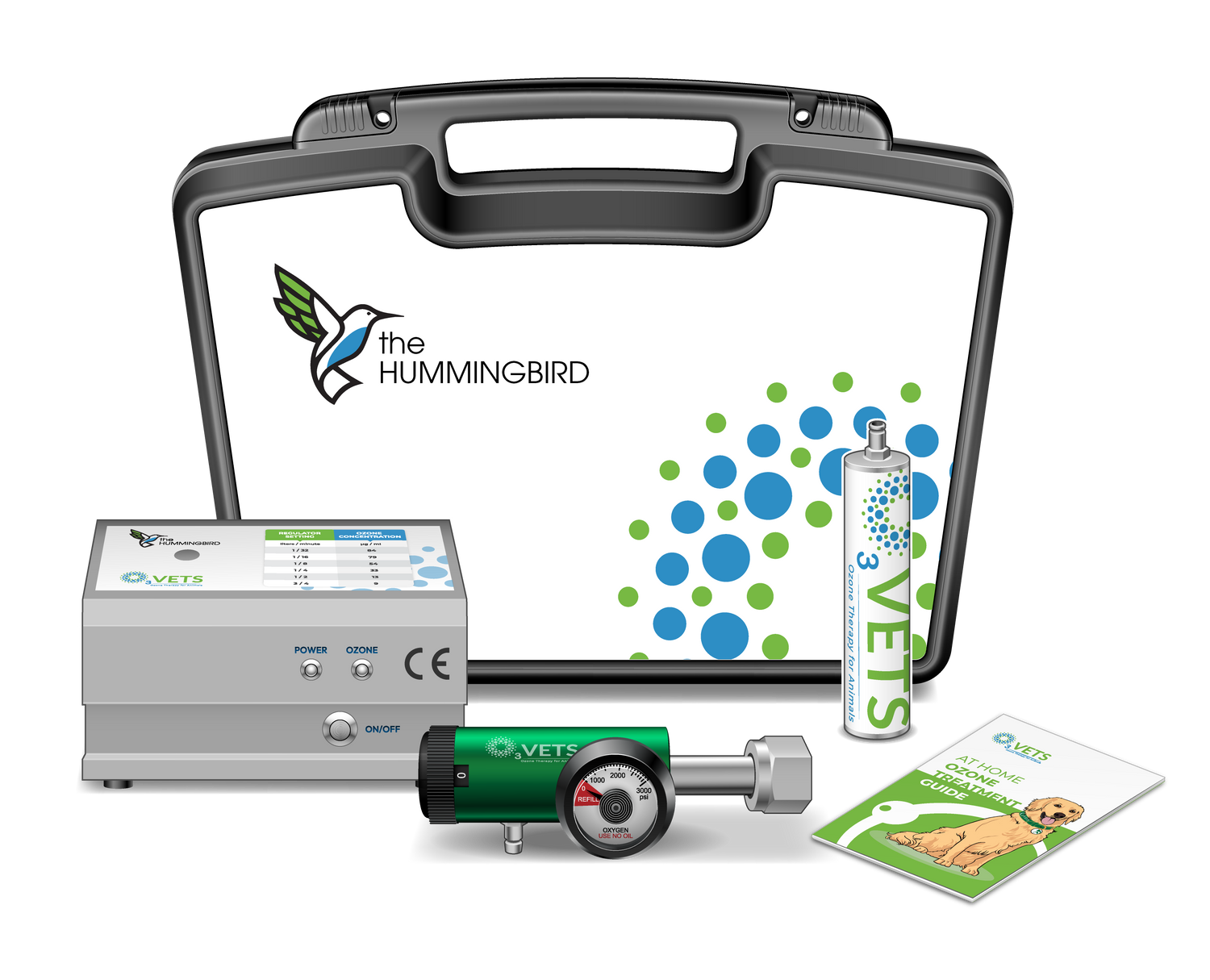
O3Pets offers the Hummingbird Ozone Generator for Pets, a compact ozone system designed specifically around at-home pet use.
Rather than simply purchasing a generator and trying to determine everything else yourself, the Hummingbird system can be paired with the oxygen regulator, ozone-resistant components and administration accessories needed for common at-home methods.
Every Hummingbird purchase also includes access to the PetOzone Academy and a live training session to help owners understand how to set up and operate their equipment.
These aren't competing approaches. Ideally, they complement one another and you have a veterinarian who is able and willing to assist you in realizing this critical treatment.
A veterinarian can:
A properly trained pet owner may be able to:
The goal isn't to replace your veterinarian. The goal is to allow appropriately trained pet owners to participate in aspects of their dog's care when their veterinarian believes at-home administration is appropriate.
Safety depends heavily upon how ozone is used. Ozone is a reactive gas and should be treated with respect, but the most important safety principle is simple:
The lungs are particularly susceptible to oxidative damage from ozone. Proper ozone therapy equipment, ozone-resistant materials, administration technique and ozone destruction therefore matter. Pet owners should also understand that more ozone is not necessarily better.
Medical ozone is administered at specific concentrations and doses. Changing those parameters without appropriate knowledge can change the biological effect and safety profile of the treatment.
Other safety considerations include:
Used appropriately, ozone therapy has been incorporated into veterinary practice in numerous countries, but responsible administration matters.
The cost depends largely upon where treatment is performed and which administration method is used.
When treatments are performed at a veterinary clinic, owners generally pay for individual treatments or appointments.
For dogs requiring repeated treatments, some owners investigate purchasing their own at-home ozone therapy equipment.
The initial equipment investment is higher, but owning an ozone generator allows the same system to be used repeatedly when ongoing home treatment is recommended.
Before purchasing equipment, consider:
Price alone shouldn't determine which ozone system you purchase. With ozone therapy, knowing how to use the equipment correctly is every bit as important as owning the equipment.
If you're interested in ozone therapy, a good starting point is to talk with a veterinarian familiar with your dog's medical history. Ask whether ozone therapy could reasonably fit into your dog's overall care plan and which administration method would be appropriate.
If your veterinarian recommends an approach that can be performed at home, the next step is obtaining appropriate equipment and training.
O3Pets has developed an at-home system specifically for this purpose.
We can help you with everything ozone therapy, but your veterinarian is able to understand best how ozone therapy fits into the larger treatment plan and recommend synergistic options to ensure the best treatment possible.
The Hummingbird Ozone Generator for Pets is designed specifically for pet owners performing ozone therapy at home.
Explore the Hummingbird Ozone Generator →
The O3Pets PetOzone Training Course covers the fundamentals of ozone therapy, equipment setup and common at-home administration methods. This is included with every Hummingbird Ozone Therapy Generator purchase.
We also provide a LIVE 60-minute Zoom consultation to walk you through the process and answer all of your questions.

The goal of at-home ozone therapy isn't to turn pet owners into veterinarians.
It's to give informed pet owners another way to participate in their animal's care when their veterinarian determines that an at-home ozone protocol is appropriate.
That requires three things:
The right equipment. The right education. The right veterinary guidance.
When those pieces come together, certain ozone therapy methods can move from something that requires repeated trips to a clinic to something that can be incorporated into a dog's care at home.
If you're considering ozone therapy for your dog, start by learning about the therapy, speaking with your veterinarian and understanding the equipment before deciding whether at-home ozone therapy is right for you.
Ozone therapy uses a controlled mixture of oxygen and ozone as part of a veterinary treatment protocol. Depending upon the treatment objective, medical ozone can be administered through several local or systemic methods.
Certain administration methods can potentially be performed at home by properly trained pet owners under veterinary guidance. Other procedures require a veterinarian and should not be attempted at home.
Rectal insufflation is one of the most commonly used at-home methods because it does not require an injection and can be performed relatively quickly after appropriate training.
No. Ozone gas should not be deliberately inhaled by dogs or people. Therapeutic ozone administration methods are designed to avoid pulmonary exposure.
Medical ozone generators typically produce ozone from a high-purity oxygen source. The generator converts a small portion of that oxygen into ozone, producing an oxygen-ozone mixture at a controlled concentration.
Household ozone generators designed for air purification or other non-medical applications are not necessarily appropriate for ozone therapy. Therapeutic applications require appropriate ozone concentrations, oxygen sources, ozone-compatible components and administration equipment.
There isn't one treatment schedule appropriate for every dog. Frequency depends upon the administration method, treatment objective, individual animal and veterinary protocol. Your veterinarian should help establish the appropriate schedule.
Ozone therapy should not be viewed as a universal cure. Veterinary research into medical ozone is growing, but the evidence varies substantially between conditions and applications. Ozone is best considered as one potential modality within a broader veterinary treatment plan.
Veterinary oversight is strongly recommended. Your veterinarian can evaluate your dog's condition, determine whether ozone therapy is appropriate and help establish the administration method and protocol. Proper equipment training is also important.
O3Pets provides at-home ozone therapy education through the PetOzone Academy, treatment guides and live training associated with its Hummingbird ozone therapy equipment.

Jonathan Lowe is an author, educator and entrepreneur who has spent more than a decade advancing the understanding and responsible use of ozone therapy for animals. He is the founder of O3Vets, an organization dedicated to veterinary ozone therapy equipment and education, and O3Pets, which helps pet owners learn about veterinarian-guided ozone therapy at home.
Jonathan is the author of The Essential Guide to Ozone Therapy for Animals, a comprehensive resource on the veterinary applications of medical ozone. His work has brought him alongside veterinarians and ozone therapy experts from around the world, with a particular focus on translating clinical knowledge into practical education for veterinary professionals and pet owners.
He is also the founder of the International Veterinary Ozone Therapy Summit, created to bring together veterinarians, researchers and thought leaders to share emerging research, clinical experience and best practices in veterinary ozone therapy.
Jonathan's approach emphasizes evidence-informed integrative medicine: understanding the available science, recognizing its limitations, and exploring therapies that work alongside the body's natural biological processes. Through his writing, educational programs and work with O3Vets and O3Pets, his goal is to help advance the responsible use of ozone therapy in veterinary medicine while making reliable information more accessible to pet owners.
O3Vets has been recognized with the Innovation Award from Innovative Veterinary Care Journal.
Jonathan lives near Lansing, Michigan, with his wife and five children.